Women inspiring women
· ★
Search for inspiring women online and the same names keep coming back. Here are six women of our time who broke the roles expected of them.
Recent studies have shown that if women have female role models, they tend to be more confident, interested, and active in their domains; they become more invested in fields such as science, technology, politics, engineering, and mathematics, and they are less affected by the stereotype threat that is imposed on them by our patriarchal society. And yet when I searched for inspiring and influential women on the internet, I could only find about 20 of the same ones repeating on multiple websites. As if the internet was trying to tell me that, through the centuries, there were only 20 influential women that could help to inspire half of the world’s population and therefore boost their performance and lower the gender gap. So I took it upon myself to find influential women of our era who fought against their expected gender roles and succeeded, so that they could continue to inspire me and hopefully also some other women.
Laxmi Agarwal
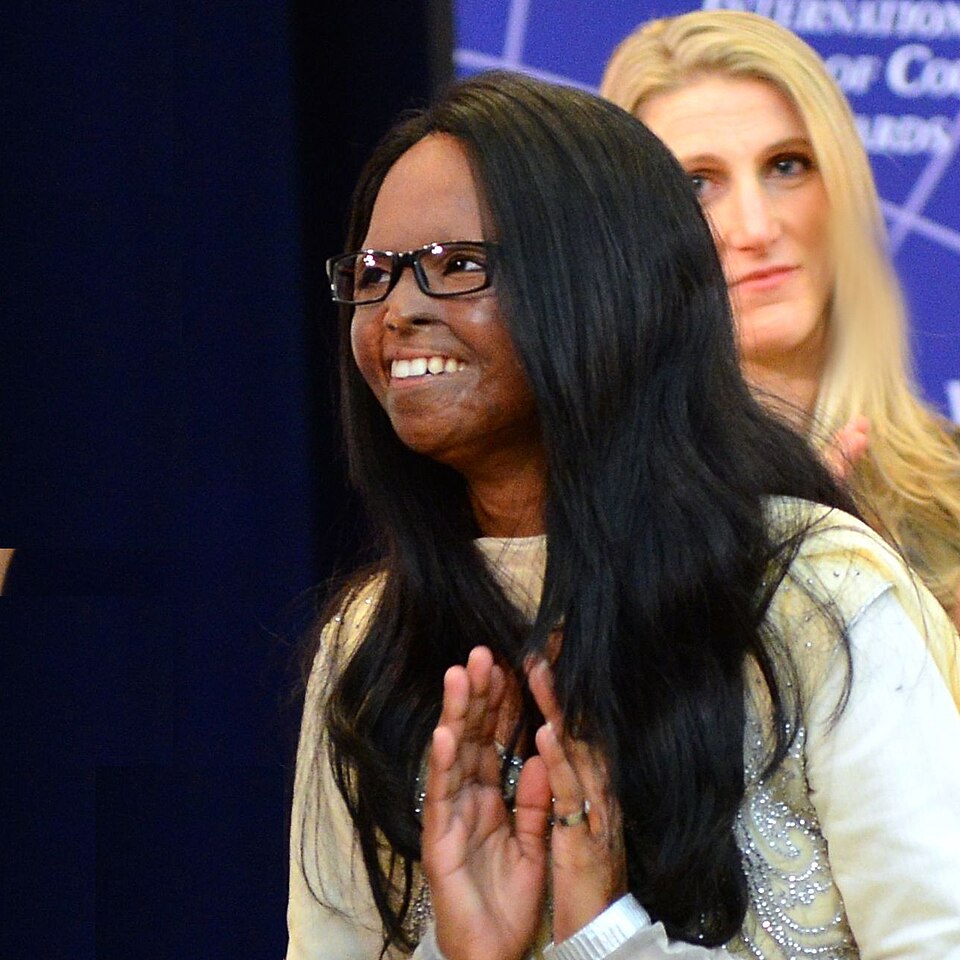
On 2 April 2005, when Laxmi was only 15 years old, she became a victim of an acid attack. While she was waiting for a bus, two men on a motorbike rode up to her, pushed her to the ground, and poured acid onto her face, chest, back, and hands. She knew one of these men, because he had relentlessly pursued, and stalked her, and demanded that she marry him. After she repeatedly refused his proposal and started ignoring him, he decided that if he could not have her, no one would want her.
After the attack, she spent 2 months in the hospital and then another 3 years at home, as she could not walk or see properly and was severely depressed, and yet some people still blamed her for the attack. When she was finally able to leave the house and started looking for a job, interviewers who were keen over the phone lost interest during face-to-face interviews. After multiple reconstructive surgeries, she still has some complications and is in pain, but as she says, “He threw acid on my face, not on my dreams,” so she never stopped fighting.
In 2006, she filed a case against her attacker, and later (when she was 19) she filed a public interest litigation in the Supreme Court of India regarding stricter regulations on the sale of acid. At the time, acid could be bought as a household cleaning product without any identification or regulation. In 2013, she went public with her story and fronted a petition to regulate the sale of acid. The government responded with landmark directives regulating the sales of acid across India. Retailers were required to maintain records identifying the buyers and justify the purchase.
But Laxmi’s activism did not end there. Later, she started working with the Chhanv Foundation, creating a support network for survivors, who faced unemployment, financial issues, and isolation after their attacks. She is also behind the creation of Sheroes Hangout, a café run by acid attack survivors.
In 2014, Laxmi received the International Women of Courage Award from US First Lady Michelle Obama; she was chosen as the NDTV Indian of the Year, and in 2018, she was awarded the Mother Theresa Award. Nowadays, she continues to help the survivors of acid attacks through The Laxmi Foundation; she is a TEDx speaker and also the face of several fashion brands.
Latifa Nabizada
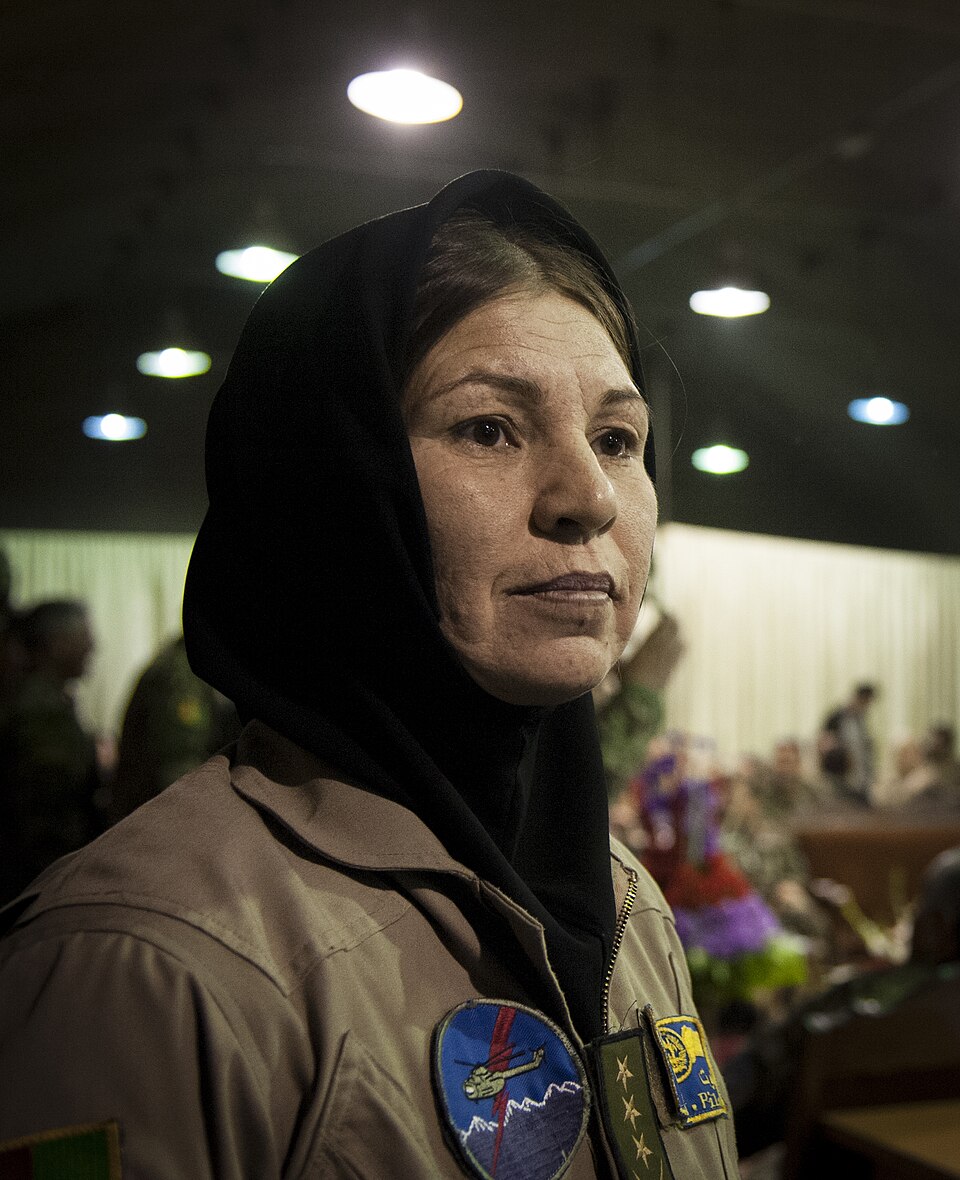
Latifa and her sister Laliuma grew up looking at the sky; they always talked about the universe, how aeroplanes were made, and how it feels to be a pilot. They wondered if it was possible for them to fly one day. So after they graduated from school, they were determined to turn their childhood dream into reality.
They informed their parents that they wanted to be pilots and convinced them to allow them to apply to Afghanistan's military flight school. However, getting into the school was more of a challenge; the army doctor found non-existent heart and hearing problems and failed them on their medical exam 3 times. Eventually, a civilian doctor certified them fit, and in 1989 they became officially the first women to train in the flight school. But even then, the sisters did not have it easy; they were the only girls in the class with 72 boys, and the other students would throw stones at them, yet this would not stop them. They worked hard, which was reflected in their exam results, but it seemed their results were too good; as the school would not believe that the girls possibly could score higher than the boys, the sisters were subjected to more rigorous testing. They were assessed by an entire committee rather than their own teachers. When they were allowed to graduate, Latifa considered it to be the day when they showed the authority of Afghan women.
For a while, Latifa flew around Afghanistan performing her duties as the first female fighter pilot. However, the sisters qualified just as the Taliban was in its ascendancy. In 1998, Latifa was nearly captured as she delivered ammunition to the front line. As she arrived, villagers told her that the Taliban had just captured the area, so she took off and made her escape under heavy fire. As the situation continued to deteriorate, the sisters with their family were forced to move up north. But even there they were not safe, as the Taliban was on their trail. So they fled to Pakistan. The Taliban could not deal with the fact that they were women pilots and flying for enemy forces. They captured their 3 brothers and tortured them to reveal the sisters' hiding spot, but the brothers did not disclose this information.
Eventually, word came that the Taliban was being pushed back, so the sisters returned to Afghanistan. The first thing Latifa did was come to the military base and announce: “I am back and I want to start my work.”
In 2006, both sisters became pregnant within weeks of each other. In order to continue working, they hid their pregnancies as long as possible. Later, however, Laliuma died due to childbirth complications. For Latifa, it was a major loss in her life, yet she took in Laliuma’s child. And with help from her mother, they took care of the child.
Latifa was back in the air only 2 months after giving birth, but there was nobody who could take care of her daughter, nor was there any kindergarten in the military. So her daughter started flying with her. Her daughter is now in school, but Latifa still wants the army to create a kindergarten for other women who are becoming pilots.
Customarily, when you ask a kid whose child they are, they usually give their father’s name. Latifa’s daughter, Malalai, always says, “I am the daughter of pilot Latifa”. She is immensely proud of her mother.
Judith Heumann
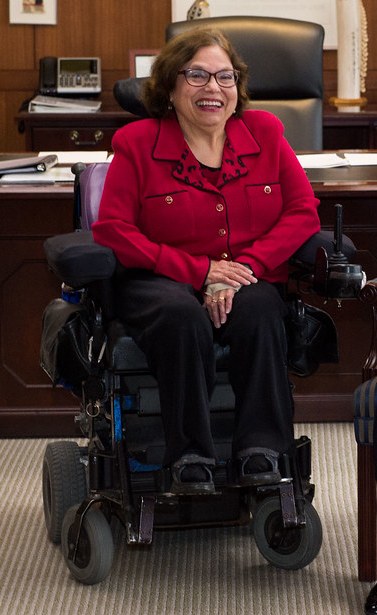
Judy was born in 1947 in Brooklyn, NY, as a daughter of German Jewish immigrants. She was only 18 months old when she contracted polio and lost the ability to walk. As she attempted to start kindergarten, the principal physically blocked her and her parents from entering and called Judy a “fire hazard.” Due to her mother’s persistence, Judy was able to attend special school and later a high school. After graduation, she attended Long Island University, where she organised students to demand ramps to access classrooms.
In the 1970’s she sued the New York Board of Education, because they refused to give her a teaching license, as they were afraid she would not be able to evacuate herself and her students in the event of a fire (being once again seen as a fire hazard). The board reconsidered their decision, and Judy became the first wheelchair user to teach in the state of New York.
In 1977, she organised the 504 Sit-in, a 28-day long protest, that led to Section 504 of the Rehabilitation Act being signed into law. She also contributed to the development and implementation of other legislation, such as the Individuals with Disabilities Education Act, the Americans with Disabilities Act, the UN Convention on the Rights of Persons with Disabilities, and she also co-founded the World Institute on Disability, helping with the inclusion of disabled people in the US and around the world.
From 1993-2001, Judy served as assistant secretary of the Office of Special Education and Rehabilitation Services in the Clinton Administration. Then she served as the first Advisor on Disability and Development in the World Bank from 2002-2006. In 2010, Judy became the first Special Advisor on Disability Rights for the US State Department. Appointed by Obama, she worked to make disability rights part of the State Department’s agenda.
Judy travelled the world and played a crucial role in the inclusion of disabled people. Yet she did not see herself as any different from others. She once said to an interviewer, “ I call you non-disabled, because the likelihood of you acquiring a disability, temporarily or permanently, is very high.” Sadly, Judy passed on 4 March 2023 at the age of 75.
Malala Yousafzai
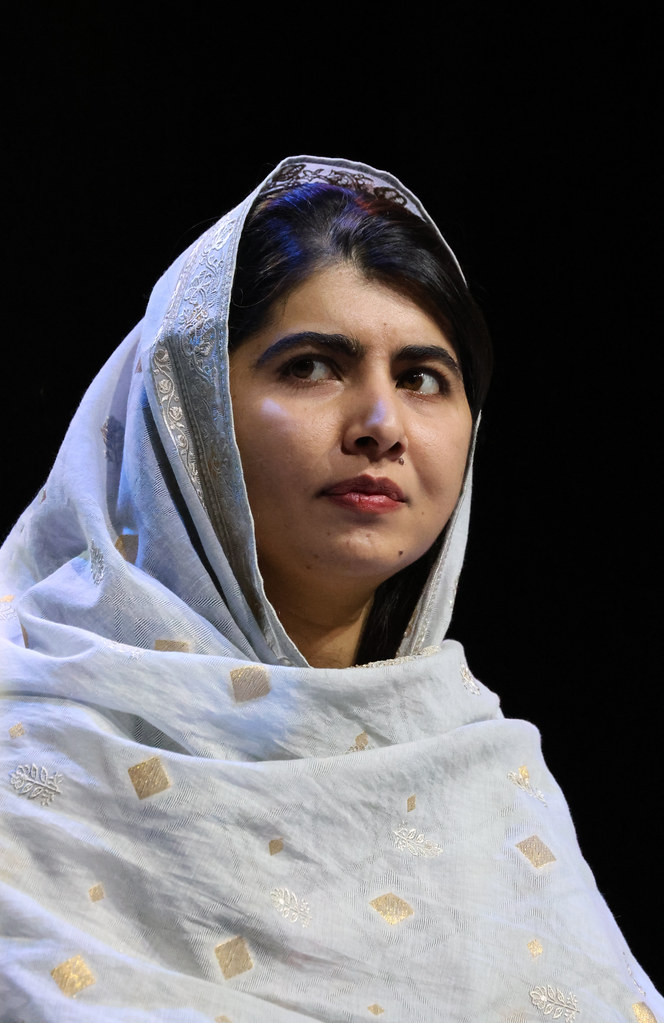
Malala was born on 12 July 1997 in Mingora, Pakistan. Malala’s father was an education advocate and ran a girls’ school in their village. He wanted Malala to receive the same opportunities as the boys did. Due to her father’s influence, Malala became passionate about knowledge. However, when she was 10 years old, the Taliban took over the area that she lived in. Girls were banned from attending school, and owning a television, playing music, or dancing were prohibited. By 2008, the Taliban had destroyed over 400 schools. At just 11 years old, Malala decided to stand up to the Taliban. In 2009, she started blogging for the British Broadcasting Corporation (BBC) under a pseudonym. She spoke about her life under Taliban rule and how she wanted to attend school. Later, she and her family were forced to flee the region as it was no longer safe. But this did not stop Malala from advocating for her right to education. By 2011, she was nominated for the International Children’s Peace Prize, and that same year she earned Pakistan’s National Youth Peace Prize. However, not everyone liked her campaign.
On 9 October 2012, 15-year-old Malala was on the bus returning from school when 2 Taliban members stopped the bus and shot her in the head. She was seriously wounded; that same day, she was airlifted to a Pakistani military hospital and 4 days later to intensive care in Birmingham, England. Once in the UK, she was woken from a medically induced coma. She suffered no brain injury, but the left side of her face was paralyzed, and she would require multiple reconstructive surgeries and rehabilitation.
In 2013, Malala began attending school in Birmingham, but she had not stopped fighting for girls to be educated. That same year she was awarded the Sakharov Prize for Freedom of Thought by the European Parliament. In 2014, Malala and her father established the Malala Fund to support and advocate for women and girls. In December of that same year, she won a Nobel Peace Prize for her work and became the youngest Nobel Prize laureate at the age of 17.
Malala continues to advocate for young women. Through her charity, she met with Syrian refugees in Jordan, young female students in Kenya, and spoke out in Nigeria against the terrorist group Boko Haram, which abducted young girls to stop them from going to school.
Felicity Aston
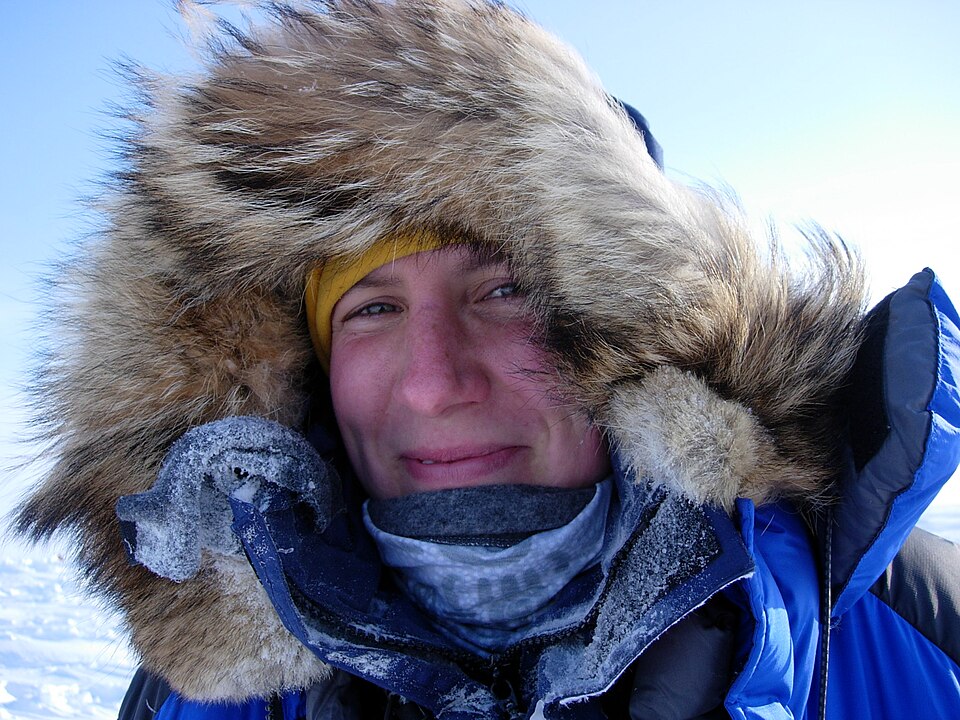
Felicity Aston MBE is a British polar explorer, climate scientist and expedition leader. During more than 20 years of undertaking expeditions in the world’s most extreme environments, she has organised and led multiple groundbreaking expeditions. However, she did not always dream of becoming an explorer. At university, she first studied astrophysics, but she realised that she was not at the top of her class to get one of the few jobs available in astronomy, so she switched to meteorology for her master’s, where she became interested in palaeoclimatology, which led to her dissertation on Antarctica, which in turn got her a job in the British Antarctic Survey as a meteorologist.
When she was 23, she went on her first trip to Antarctica to monitor climate and ozone there. She was posted to Rothera Research Station for 2,5 years from the year 2000 to 2003. And even in Antarctica, she had to deal with a sexist mindset. For example, they did not allow her to open the main station after winter, and they instead gave the task to a male junior meteorologist, as it required a lot of digging (for a woman). She found it ridiculous as the guy was skinny, short and looked 12 years old. Another instance was when they had to sling up a rope suspension bridge. Even though Felicity was the most experienced polar traveller there, they gave the job to another man, who ended up with frostbite from the work.
It took Felicity a while to recognise it as sexism, but once she did, it made her very angry. Subsequently, she decided to organise an all-female expedition to the South Pole. In 2009, seven women, who came from New Zealand, India, Cyprus and Brunei, ended up joining Felicity on this trip. And it was not the only women’s expedition she organised; another included, for example, the first British Women’s crossing of Greenland,36 000km drive to the Pole of Cold or the Women’s Euro-Arabian North Pole expedition.
However, the biggest challenge Felicity set upon herself came at the end of November 2011, when she decided to go on a solo trip across Antarctica. She set off from the Ross Ice Shelf and had to cross 1744 km in order to reach a spot called Hercules Inlet on the opposite coast.
She was pulling 2 sledges loaded with 85 kg of food, stove fuel and other equipment, skiing in temperatures ranging from -5°C to -20°C and battling the katabatic winds. But during those times, the strongest motivator for Felicity was thinking of all those people who had underestimated her. Skiing 25-47 km daily, she completed the expedition in just 59 days, making her the first woman in the world to cross Antarctica alone and the first person to do so using just muscle power.
Since then, Felicity retraced the route of the 1898 Klondike Gold rush across the Yukon in 2016, led the B.I.G. North Pole expedition to collect vital sea ice data from the Arctic Ocean in 2023, published 5 books, co-presented 2 BBC documentary series, produced 2 award-winning film projects and won multiple awards for her expeditions.
Humaira Bachal
Humaira’s mother made sure that Humaira was educated; that was in defiance of her husband, who protested about their daughters being educated even at the primary level. Humaira, herself, did not find going to school enjoyable; that was until she saw how devastating illiteracy could be. Once a year, her father took them on their annual summer visit to their ancestral village. His brother was a community elder and decision-maker there, and he forbade women from getting an education and going to the hospital when they were ill. These rules, of course, applied also to his own family, so his daughter Shabana was uneducated. This decision about not educating girls came back to haunt him.
One day, when Humaira returned to their house and found everyone crying, because her cousin, Shabana’s son, had died. It was due to Shabana’s illiteracy, as she gave her son expired medication because she could not read the label and know any better. That was when Humaira realised the value of education and committed to finding solutions to these problems.
She continued her education without her father’s knowledge; that was until her ninth-grade exams, when her father found out and beat her mother and her. Eventually, Humaira’s mother convinced him at least to let Humaira attend her exams, and when she aced them, he relented and allowed her to finish her education.
Humaira was determined to change the situation in her country and make education available to other girls too. She started simply by explaining to people why it mattered, but they would tell her that it was not within their culture and religion. So she attended an Islamic educational institution (madrasa). Even though she did not finish the degree (because of differences of opinion she had with her teachers), she gathered enough information regarding women’s rights in Islam, and she was set to re-educate her community. She started by door-to-door campaigning, and eventually she was able to convince some of the parents to send their daughters to her school. Then these girls graduated; other parents saw the change and sent their daughters to school too. It was already a big change for the community, but Humaira wanted more; she wanted girls to be educated past the age of 13. So she came up with a trump card: for every girl educated beyond the age of 13, two sons will be educated for free, and it worked.
Now Humaira has a school with 22 teachers and over 1200 students; she established Dream Foundation Trust, and she continues to tackle Pakistan’s education problem. In the future, she wants to build more schools in neighbouring communities and continue to inspire more girls to be educated and empowered.
Afterword
These 6 women went against their expected gender roles, and even though society kept putting obstacles in their way, they were able to succeed. They not only helped to lower the gender gap and contributed to the feminist movement, but they also inspired me and hundreds of other women. Because if women who had much harder conditions than we have in the Western world were able to succeed, then every woman in the world can. So do not stop dreaming big just because it sometimes seems impossible to achieve your dreams in a society ruled by men, and continue to push through gender bias, as it will not only help you, but also thousands of other girls in the future.
Felicity Aston, Humaira Bachal, Judith Heumann, Latifa Nabizada, Laxmi Agarwal, Malala Yousafzai, feminism, inspirational women, women